

CNAPP has become the go-to term in cloud security, but most definitions stop at acronym expansion. This guide breaks down exactly what a Cloud-Native Application Protection Platform does, how it unifies CSPM, CWPP, CIEM, and KSPM under one roof, and why point solutions are losing the battle. Written for security leads who are evaluating their first or next CNAPP.
TL;DR
- CNAPP is a control plane — not a dashboard — connecting code, cloud, runtime, and AI workloads under shared Zero Trust policy enforcement.
- The 4C model (Code, Cloud, Container, Cluster) is the minimum. AI adds the fifth layer: Cognition.
- Runtime enforcement is the line between a security tool and security theater — KubeArmor blocks at the kernel level.
- Shift left reduces known risk. Secure right is where advanced attacks actually get stopped.
- Fragmented tooling — CSPM here, CWPP there — leaves seams. Attackers live in seams.
Most vendors define CNAPP as a visibility consolidation story. AccuKnox defines it differently: as an active policy enforcement layer from code to cloud to cognition — with runtime guardrails that block, not just detect.
CNAPP is not a product category. It’s a security philosophy — one that starts with Zero Trust enforcement at runtime and extends backward through your entire code-to-cloud lifecycle. Visibility without enforcement is just expensive observation.
The honest version of the CNAPP story
Every major breach in the last three years crossed at least three cloud security layers — cloud security posture, container runtime, cluster permissions — before anyone noticed. The problem wasn’t a shortage of tools. It was a shortage of connected tools that could enforce policy across all of them simultaneously.
CNAPP — Cloud-Native Application Protection Platform — exists because fragmented tooling creates seams between cloud workload protection, identity governance, and application security posture management. чBut the part most vendors leave out: unifying dashboards doesn’t solve the problem. What solves it is a platform built around Zero Trust enforcement principles — one that can block unauthorized behavior at runtime, not just surface it in a report three days later. That’s the gap between a visibility tool and a genuine cloud-native application protection platform.
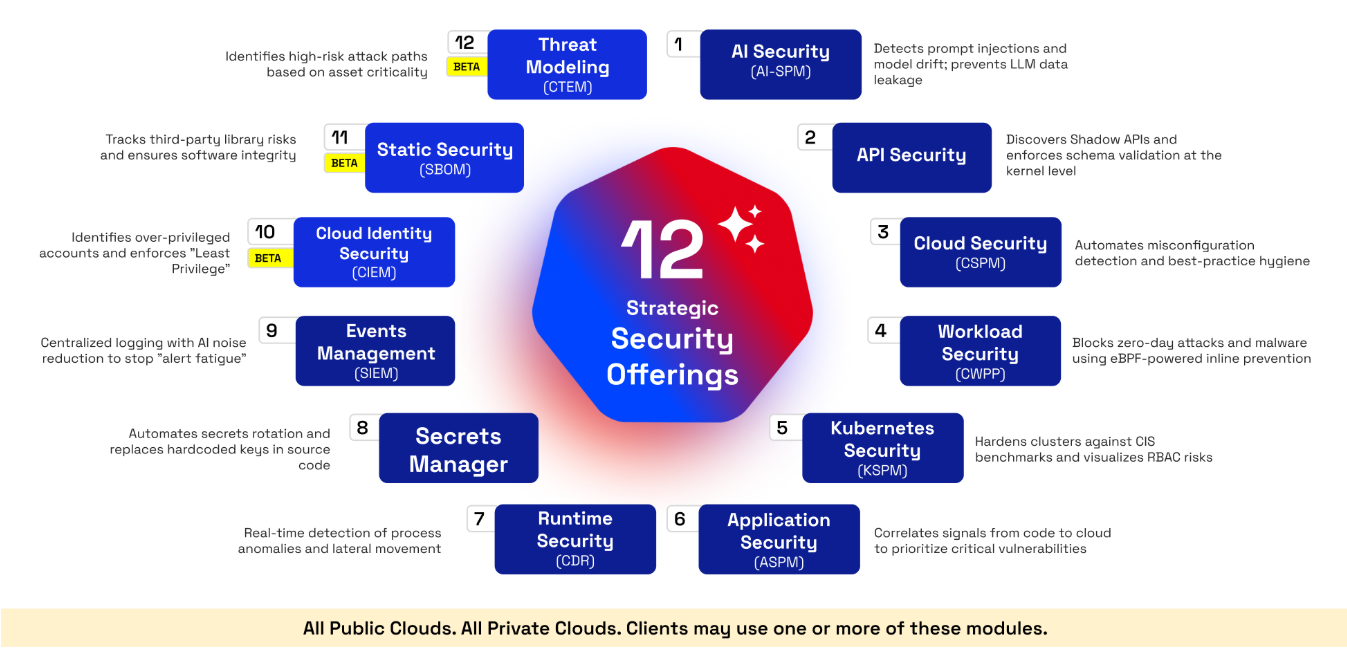
AccuKnox Zero Trust CNAPP — from static scanning to runtime enforcement and continuous compliance.
The most dangerous thing a CNAPP can do is give you a comprehensive view of your cloud security risk with no mechanism to stop anything. That’s a reporting tool wearing a security costume.
The 4C Model: Where Your Attack Surface Actually Lives
A modern cloud-native environment isn’t flat. Attacks move through it in layers — and a true CNAPP needs coverage across all four before it can correlate an attack path end-to-end.
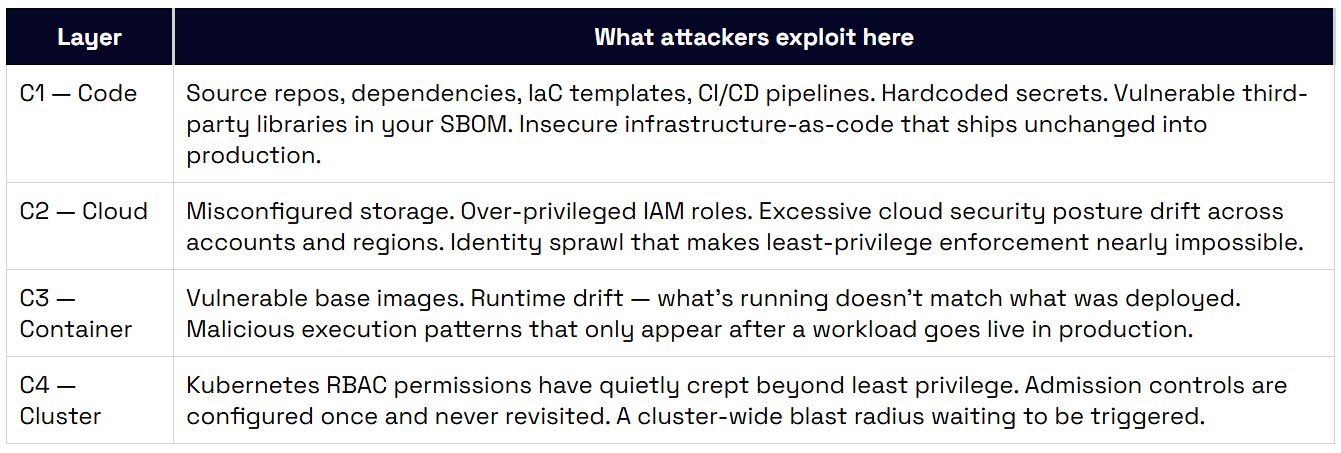
Real attack paths cross every layer — this is why point tools fail
Leaked secret in code
→ Cloud credential access → K8s privilege escalation → Runtime exfiltration
CSPM sees the cloud layer. CWPP sees the container layer. A dedicated Kubernetes security posture management tool sees the cluster layer. Run them separately — as most organizations do — and the cross-layer kill chain above is completely invisible to every tool in the stack.
CNAPP components: what each module actually delivers
CNAPP is an umbrella, and vendors use it loosely. Here’s what each module does in practice — and the security outcome it drives when built for enforcement, not just observation.
CSPM Cloud Security Posture Management
Detects misconfigurations across cloud accounts, subscriptions, and services. Good CSPM weights findings by asset criticality and exposure context. It’s the foundation of any cloud security posture management strategy, but posture without runtime correlation is half the picture.
Security outcome: Reduce configuration-based attack surface before it becomes an incident. Surface cloud security drift in real time, not in quarterly reports.
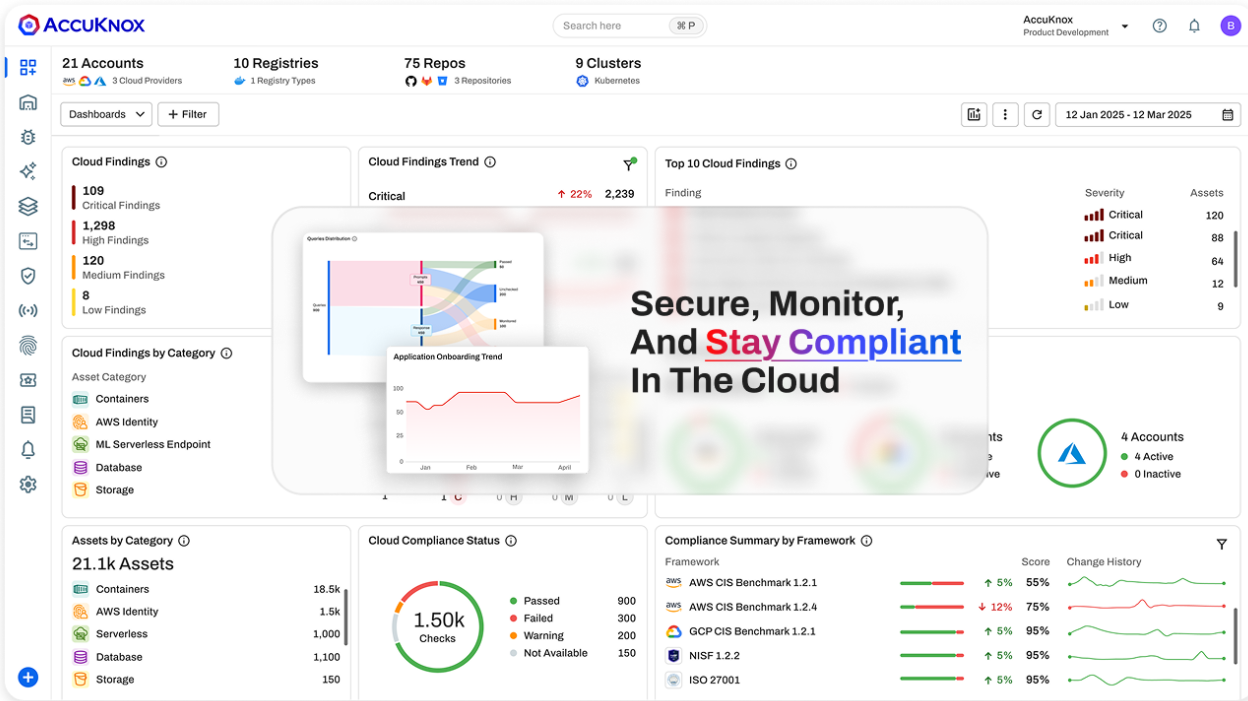
CIEM Cloud Infrastructure Entitlement Management
Overprovisioned identities remain among the most exploited vectors in cloud environments. CIEM enforces least privilege across human and machine identities, service accounts, and cross-account access paths — answering what identities are actually doing, not just what they have access to.
Security outcome: Continuous least privilege enforcement. Shrink the blast radius of any compromised credential before the next incident.
CWPP Cloud Workload Protection Platform
CWPP moves beyond static image scanning to focus on the workloads that actually run at runtime. Behavioral baselines, execution anomaly detection, and — critically — the ability to enforce Zero Trust policy at the kernel level. AccuKnox’s KubeArmor integration operates here, providing inline prevention rather than post-incident alerts.
Security outcome: Runtime visibility and inline mitigation for live workloads. Policy enforcement tied to actual execution behavior — not signatures, not schedules.
KSPM Kubernetes Security Posture Management
Benchmarks against CIS standards, flags RBAC drift before it reopens a privilege escalation path, and validates that admission controls are actually enforcing what you defined — not silently degraded since last review.
Security outcome: Hardened clusters that stay hardened. Kubernetes security posture tracked continuously, not in spot audits.
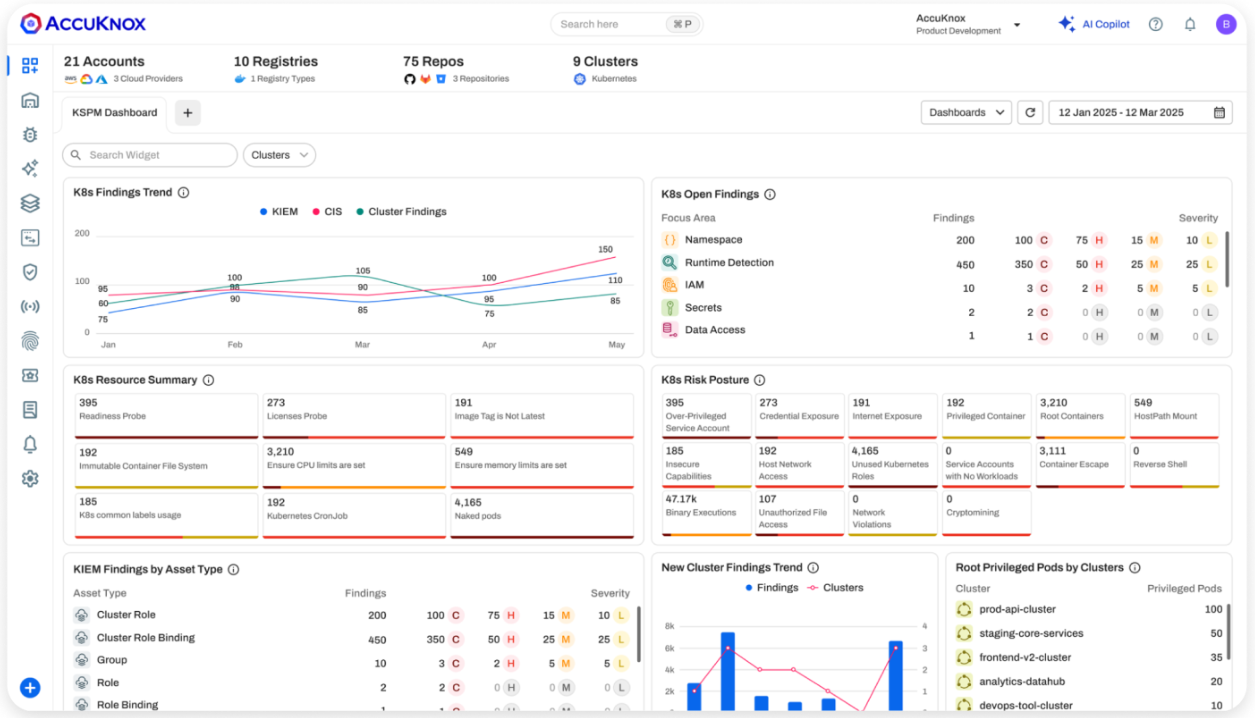
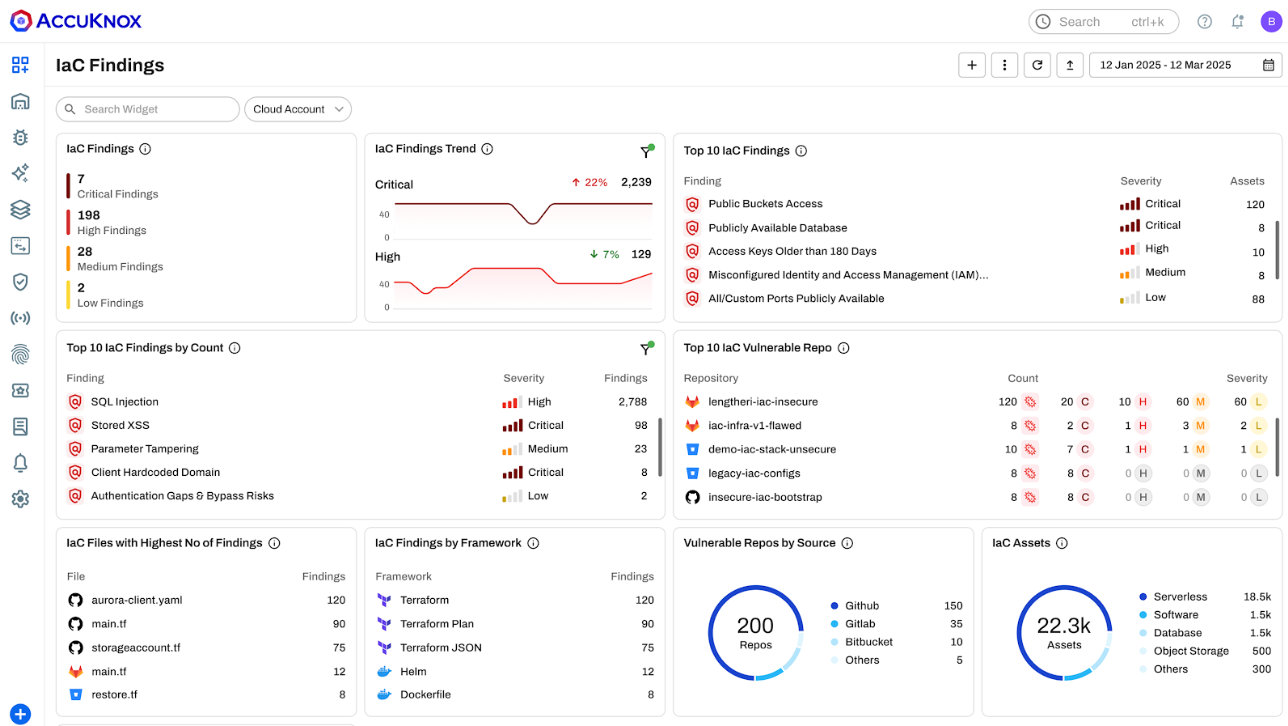
ASPM Application Security Posture Management
Correlates vulnerability signals with production context — what’s deployed, what’s reachable, what’s under active exploitation pressure. Tells developers what a prioritization model actually needs to tell them: fix this now, or it can wait.
Security outcome: Eliminate backlog noise. Focus sprint cycles on vulnerabilities with a credible path to production impact.
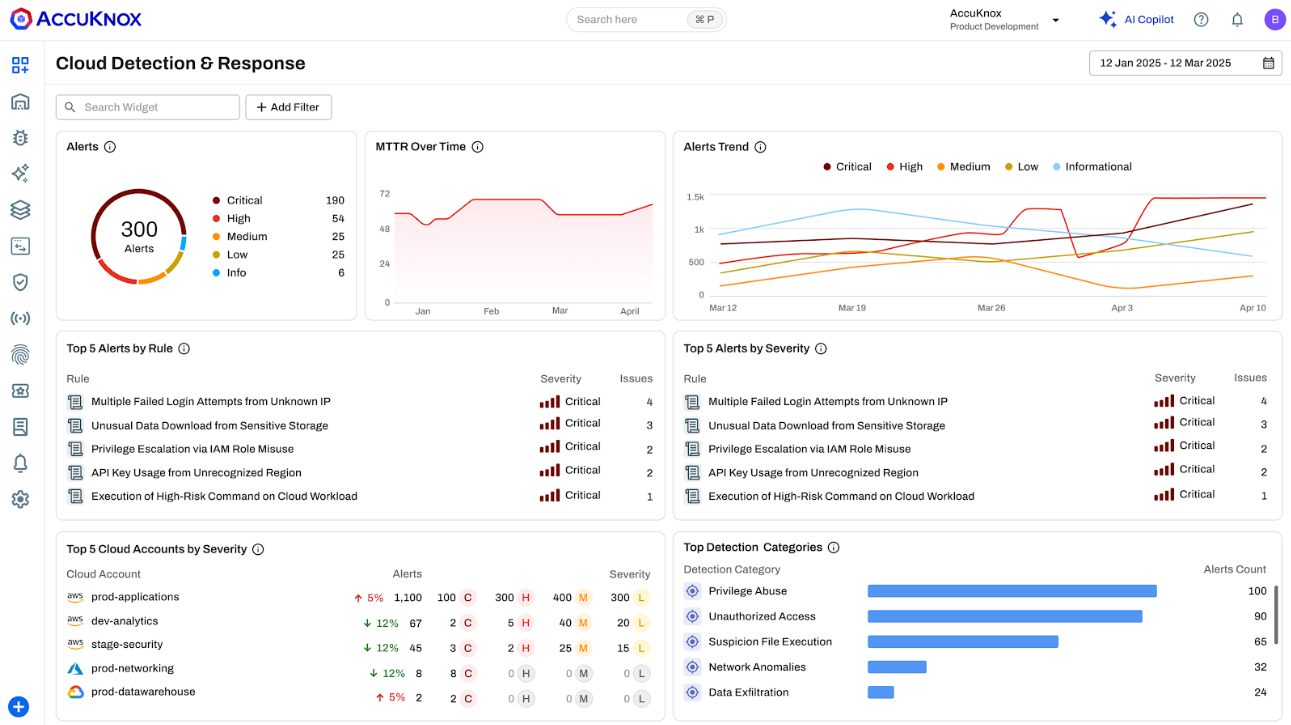
CDR Cloud Detection & Response
All advanced attacks are runtime attacks. CDR enforces and detects behavioral anomalies in live workloads — lateral movement, anomalous process spawning, unexpected outbound calls, privilege escalation in action. CDR that blocks is fundamentally different from CDR that only alerts.
Security outcome: Contain active threats before they reach the exfiltration stage. Inline guardrails, not post-incident forensics.
AI-SPM AI Security Posture Management
AI workloads are part of the production blast radius in 2026. Prompt injection, model drift, sensitive data leaking through outputs, shadow AI deployments — none visible to traditional CNAPP modules. AI-SPM extends cloud-native application protection into the cognition layer.
Security outcome: Governance over AI assets with the same rigor as any production workload — before the incident, not as a response to one.
Shift left is necessary. Secure right is where attacks get stopped.
Integrating SAST, SCA, DAST, IaC scanning, container scanning, and secrets detection into CI/CD pipelines is no longer optional — it’s baseline hygiene for any DevSecOps program. AccuKnox provides these integrations through marketplace actions and plugins, so security gates don’t require developers to leave existing workflows.
But shift-left scanning has a hard ceiling. It reduces known risk — the CVEs with signatures, the misconfigurations with rules. It cannot catch zero-days. It cannot stop an attacker already through the perimeter. And it cannot enforce anything.
Where point solutions fail in production
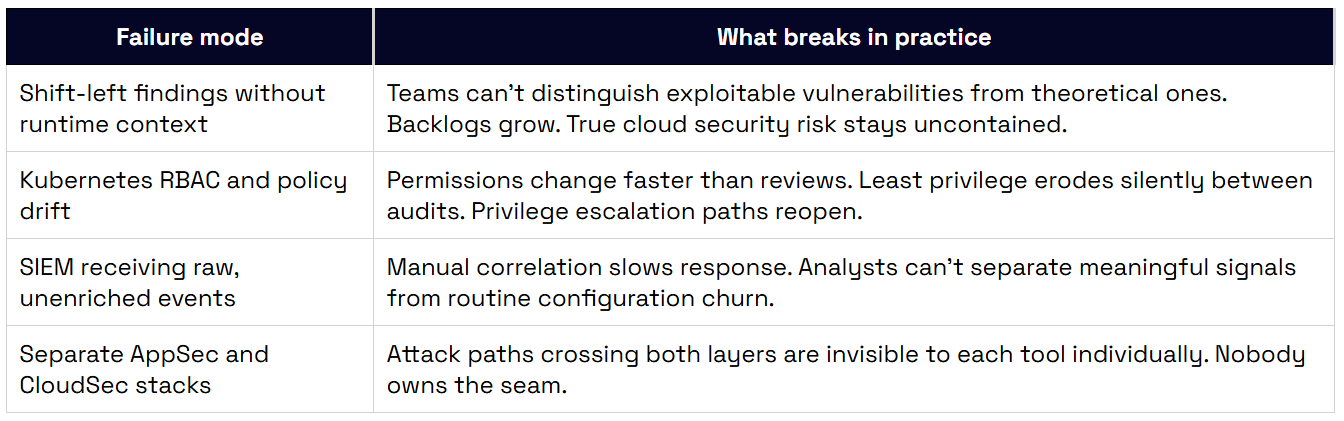
Secure right is where CNAPP earns its keep: runtime policy enforcement, enriched SIEM events, and automated ticket creation that routes findings to the right team with the right context — not another queue without ownership.
The Ideal CNAPP Enterprise Architecture for 2026 and Beyond – In the AI Era
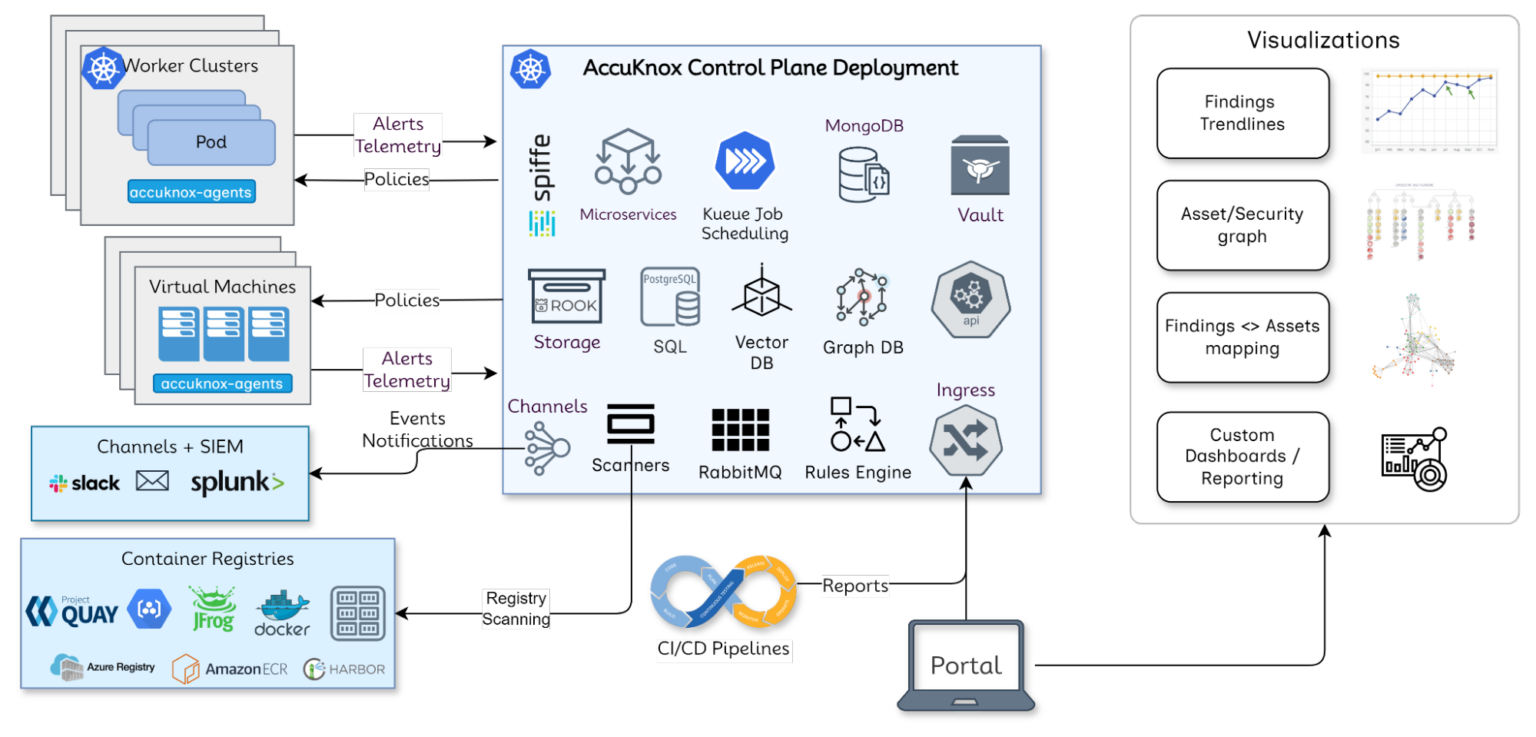
The 4C model was built before AI workloads entered production infrastructure. In 2026, they’re not a future consideration — they’re running in clusters right now, handling sensitive data, making autonomous decisions, and exposing attack surfaces that no existing CSPM or CWPP module was designed to see.
AccuKnox’s code-to-cognition claim isn’t marketing language. It’s a recognition that the security lifecycle doesn’t end at the container boundary when an AI service is running inside it.
C5: COGNITION — AI WORKLOADS AS AN ACTIVE ATTACK SURFACE
- Prompt injection — malicious inputs that hijack model behavior, bypassing application logic via the model itself.
- Sensitive data leakage — PII or proprietary data surfacing in model outputs without triggering traditional DLP controls.
- Model drift — behavioral changes over time that degrade security posture without triggering any alert.
- Shadow AI deployments — unapproved models running in production outside any security governance process.
Any CNAPP that stops at the container layer leaves a blind spot that grows larger every quarter. The code-to-cognition lifecycle is AccuKnox’s answer — extending Zero Trust enforcement principles into the AI layer with the same rigor applied to cloud workload protection.
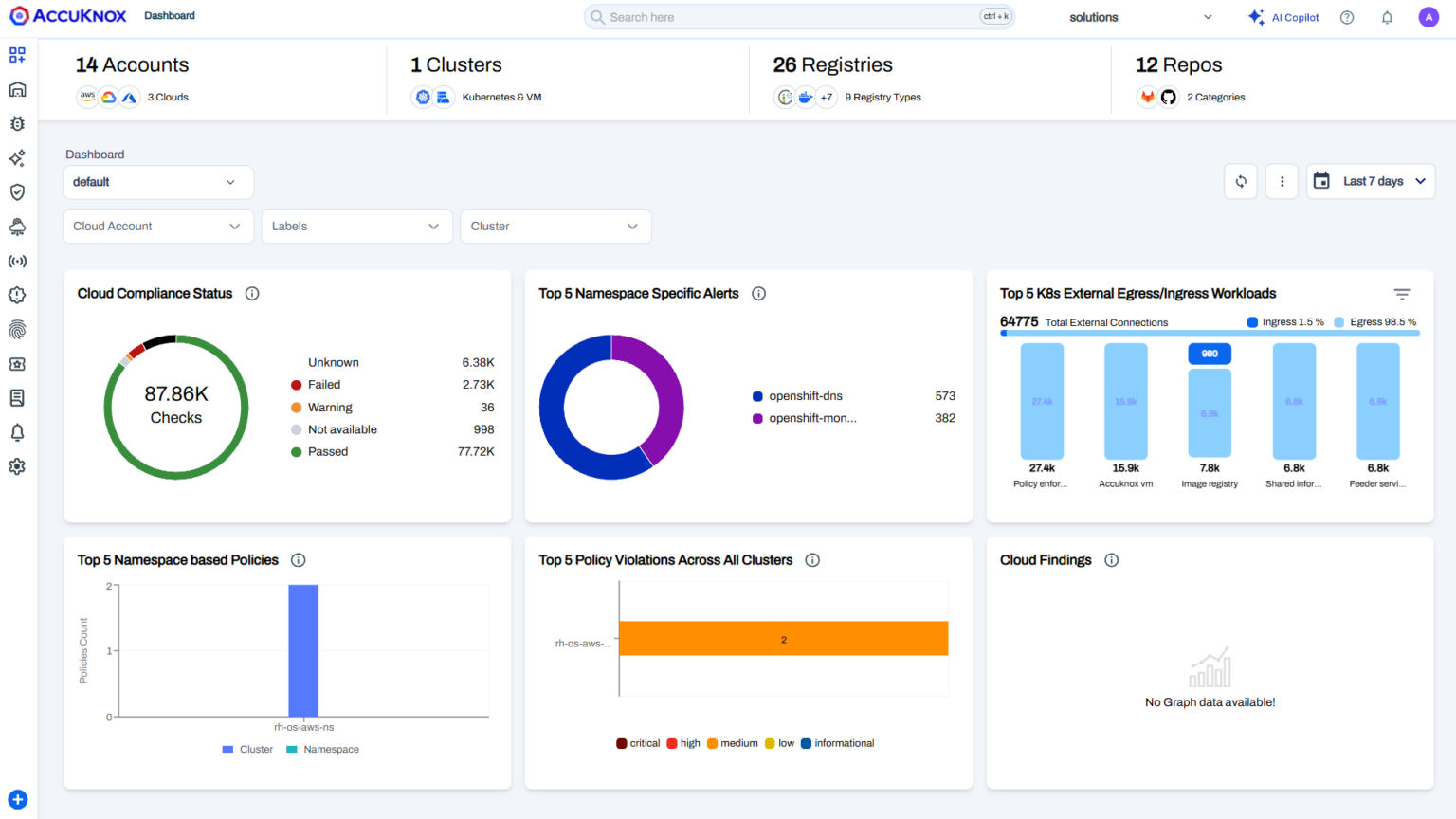
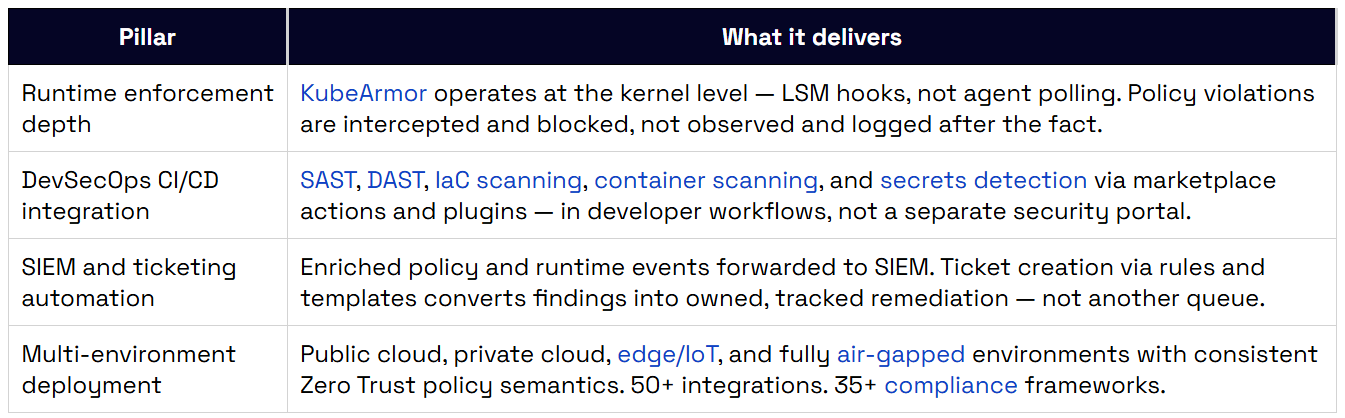
AccuKnox CNAPP Architecture and Benefits of Each Security Module
Is your current stack a true CNAPP?
Most platforms claim the CNAPP label. Three questions cut through it — and the answers have to be testable in a proof of value:
QUICK ASSESSMENT — IS YOUR CURRENT STACK A TRUE CNAPP?
Q1: Can your platform enforce inline runtime guardrails — block a process, prevent a network call, stop a privilege escalation — or detect-and-alert only?
Q2: Do cloud security posture findings, identity risk, and runtime events share a common data model — traceable end-to-end from code to runtime?
Q3: Do findings automatically route to owned tickets with severity rules and closure tracking — or land in another unowned queue?
If your answer to Q1 is detect-and-alert only, you have a posture tool — not a Zero Trust control plane. Advanced attacks move faster than manual response.
CNAPP evaluation checklist for 2026
- Can it enforce runtime guardrails with inline mitigation — block, not just detect?
- Does it cover Code, Cloud, Container, Cluster, and AI assets under a shared context?
- Are CI/CD integrations (SAST, DAST, IaC, container scanning, secrets) in developer workflows?
- Does it turn findings into owned, tracked tickets — not just SIEM alerts without owners?
- Can it deploy across public cloud, private cloud, edge, and air-gapped environments with a consistent policy?
- Does it map cloud workload protection controls to compliance frameworks with audit-ready evidence?
- Is runtime lineage demonstrable in a PoV — not just claimed in a datasheet?
Final thoughts
CNAPP is best understood as a Zero Trust control plane: a unified enforcement layer that connects cloud security posture, identity, application risk, runtime security, and AI governance so teams can block threats — not just catalog them. Shift-left scanning reduces known risk. Runtime guardrails decide whether you can contain real attacks under production pressure. The cognition layer adds the newest dimension to that calculus.
If you are building a 2026 consolidation plan, anchor evaluation in testable controls, operable workflows, and deployment reality — not vendor positioning. Book a demo to pressure-test AccuKnox’s runtime depth against the 4C model and your actual environment.
Frequently Asked Questions
What does CNAPP stand for in cloud security?
CNAPP stands for Cloud-Native Application Protection Platform, a unified approach to securing cloud and Kubernetes workloads across the lifecycle with shared context and controls.
What is included in a modern CNAPP platform?
A serious CNAPP typically unifies CSPM, KSPM, CWPP, ASPM, CIEM, and integrations for CI/CD, SIEM, and ticketing, with runtime security as the enforcement layer.
How is CNAPP different from CSPM or CWPP alone?
CSPM and CWPP each cover slices of the problem, while CNAPP correlates posture, identity, application signals, and runtime behavior so you can prioritize and enforce consistently across environments.
Do I still need SIEM and ticketing if I buy CNAPP?
Most teams keep their SIEM and ticketing systems; CNAPP should enrich events and automate ticket creation so response workflows stay intact.
Can CNAPP run in air-gapped or private cloud environments?
It depends on the vendor, but enterprise CNAPP deployments commonly support private cloud and fully air-gapped models alongside public cloud.
Source: What Is CNAPP? Cloud-Native Application Protection Explained
