


Machine Learning (ML) has revolutionized industries by empowering systems to learn from data, make predictions, automate decisions, and uncover insights—all without the need for explicit programming. With ML, systems can:
- Learn from data.
- Analyze data quickly
- Make autonomous decisions
In network security and cybersecurity, ML and other emerging technologies are crucial for detecting malicious activities such as unauthorized access, data breaches, and other complex security threats.
Network Traffic Analysis (NTA)
Network Traffic Analysis involves analyzing network traffic data to identify and analyze communication patterns within a network to uncover potential security risks. It can even detect hidden threats through encrypted traffic analysis, ensuring all forms of malicious activity are discovered.
As networks expand and become complex, traditional NTA tools may struggle to detect new or evolving threats. Integrating machine learning into advanced network traffic analysis helps address these challenges, improving detection and adaptability to rising security demands.
The Impact of Network Traffic Analysis Using Machine Learning on Network Security
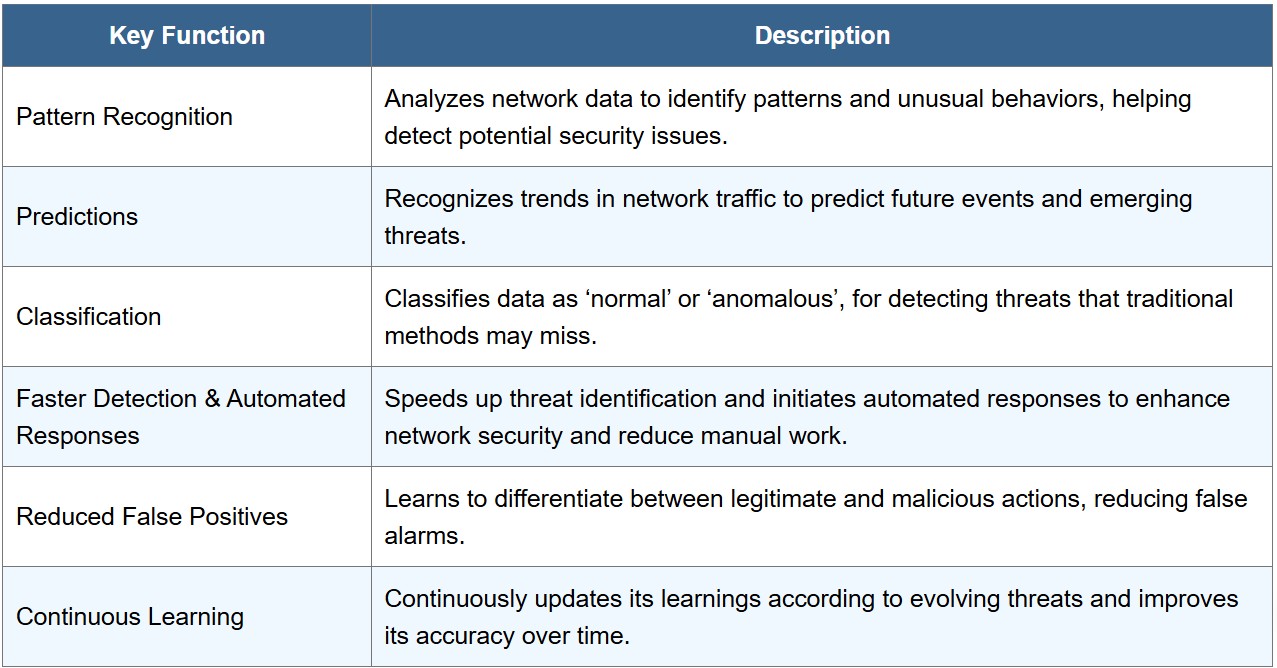
Machine learning improves NTA by automating threat detection, boosting accuracy, and reducing false threat alerts through advanced network traffic classification techniques. This is achieved through key functions including pattern recognition, intrusion detection, and continuous learning.
Let’s explore the key functions of machine learning in more detail.
Core Functions of Machine Learning in Network Traffic Analysis
Types of Machine Learning Used for NTA
There are two main types of machine learning used in network traffic analysis:
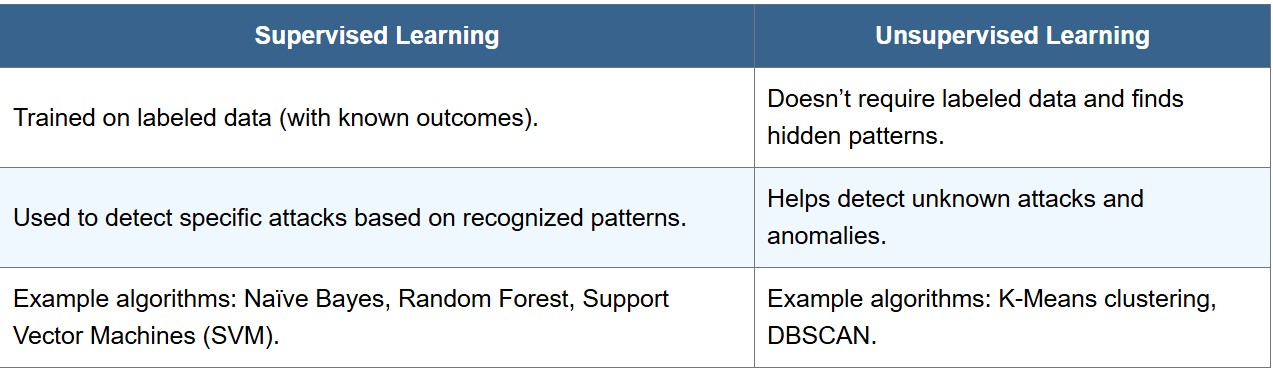
Both types have distinct advantages when used in network traffic behavior analysis.
Fidelis Network: Machine Learning in Action
To effectively use machine learning in your organization’s network traffic analysis, it’s important to choose a robust ML-integrated Network Detection and Response (NDR) tool. And Fidelis Network is the right option!
Fidelis Network is a full Network Detection and Response (NDR) solution that provides deep insights into network traffic for fast detection and response to security threats with its Deep Session Inspection (DSI) and Cyber Terrain Mapping specifications, and more.
Application of Machine Learning in NTA with Fidelis Network
Fidelis Network uses both supervised and unsupervised machine learning according to the requirements, analyzing real time and historical data to identify potential threats. It uses ML methods to spot patterns and unusual behavior in network traffic, such as strange external communication or abnormal internal movements. This approach helps detect threats like data theft, lateral movement, and malware early, providing security teams with quick, actionable alerts to respond effectively to potential issues.
Fidelis addresses two key challenges in network traffic analysis using ML:
- Fidelis uses ML to create highly accurate baseline models of typical network behavior, incorporating deep learning to flag deviations as suspicious, improving network management and threat detection accuracy.
- Fidelis applies advanced anomaly detection techniques across different contexts to reduce false positives, ensuring that network traffic data handling is efficient and focused on true threats, with only significant threats being flagged for security teams to focus on.
Contexts Considered by Fidelis Network in Network Traffic Analysis
Fidelis Network incorporates ML into its NTA system, using advanced anomaly detection models across multiple contexts.
These contexts include:
- External Context (North-South Traffic)
- Internal Context (East-West Traffic)
- Application Protocols Context
- Data Movement Context
- Events Detected Using Rules and Signatures Context
Let’s go through the contexts for more details:
1. External Context (North-South Traffic)
In the external context, ML analyzes traffic between the internal network and external locations (north-south communication). This context focuses on detecting suspicious behavior in traffic moving between internal systems and the broader internet.
An example of a threat detected:
ML detects anomalies where traffic is directed to previously unseen or unusual locations. This could potentially signal data exfiltration or other malicious activity.
Fidelis NDR uses unsupervised ML to detect abnormal external traffic patterns and correlates these findings with relevant techniques in the MITRE ATT&CK framework, such as data exfiltration and Drive-by Compromise tactics.
2. Internal Context (East-West Traffic)
In the internal context, ML focuses on traffic within the organization’s network. It tracks patterns of communication between internal assets, monitors remote access behaviors, and assesses data movement within systems.
An example of suspicious activities flagged by ML is:
Password Spraying/Brute Force Attacks – ML identifies spikes in failed login attempts, which could indicate attackers trying various passwords to gain unauthorized access.
These abnormal behaviors are detected by Fidelis using supervised machine learning algorithms that analyze connection patterns, login behaviors, and data flows. This early detection helps uncover potential threats before they escalate.
3. Application Protocols Context
In this context, ML analyzes traffic patterns at the application layer, detecting deviations in the usage of protocols such as HTTP, DNS, FTP, and others. Both types of machine learning are employed by Fidelis in the context of application protocols.
By monitoring this layer, Fidelis helps identify abnormal traffic patterns that could indicate malicious activities, such as:
- Detection of unusual application protocols being used or known protocols being accessed over uncommon ports.
- Detects instances where legitimate protocols are misused, such as malware hiding its communications inside commonly used protocols.
- Suggested Reading: Detect Threats by Modeling Application Protocol Behaviors
This context is crucial for identifying covert data exfiltration or malware communication attempts disguised within seemingly normal network behavior and traffic.
4. Data Movement Context
This context focuses on tracking how data moves across the network between assets, particularly identifying any anomalies in data transfers or file movements. This is a critical context for identifying data exfiltration or lateral movements of sensitive information. Supervised learning is used to model normal data transfer patterns between internal assets and identify anomalies, such as abnormal data collection activities.
- Suggested Reading: Comprehensive Data Security: Protecting Data at Rest, In Motion, and In Use
5. Events Detected Using Rules and Signatures Context
This context uses predefined rules and signatures to identify known threat patterns. These techniques are fundamental for detecting known attacks and malware based on their unique signatures or behaviors. Supervised learning is used to enhance traditional rule- and signature-based detection methods.
Overall, Fidelis Network uses machine learning across these five critical contexts to develop a multi-dimensional approach to network traffic analysis.
The combination of supervised and unsupervised ML, advanced anomaly detection, and contextual analysis allows Fidelis to uncover even the most sophisticated attacks—detecting everything from zero-day exploits to advanced threats. This ensures that security teams receive actionable insights and alerts, helping them respond to potential threats swiftly and accurately.
Conclusion
Combining Machine Learning with Network Traffic Analysis offers a robust, intelligent approach to network security, detecting threats from minor to advanced quickly and automatically before they can compromise the network. Adopting a robust ML-integrated NDR tool like Fidelis Network® is the ideal solution to protect your network, respond swiftly, and prevent future incidents.
Source: Advanced Network Traffic Analysis: Machine Learning and Its Impact on NTA

